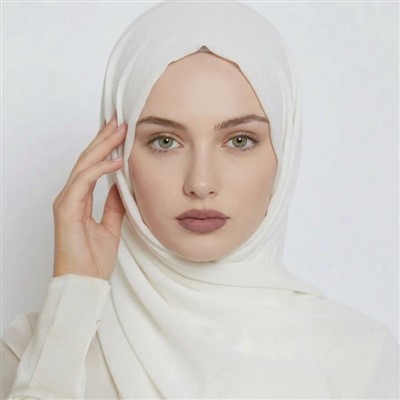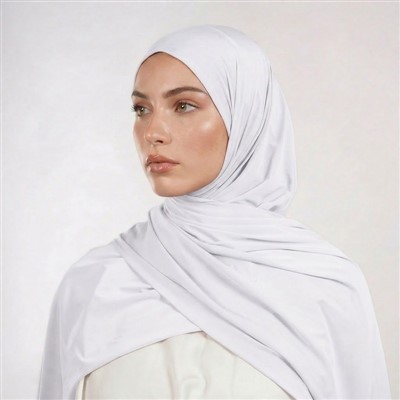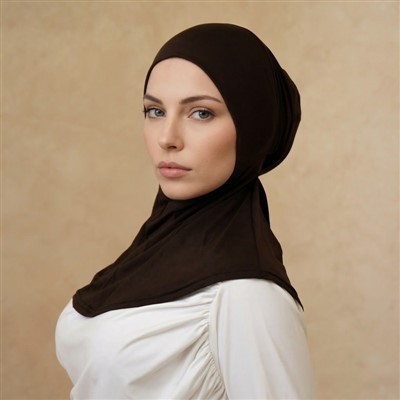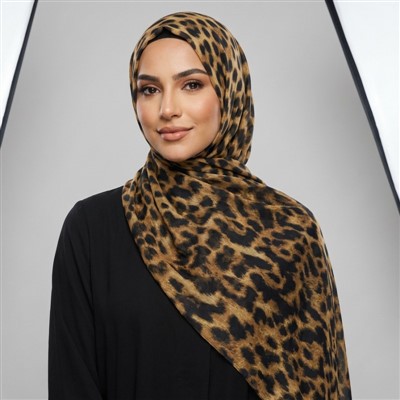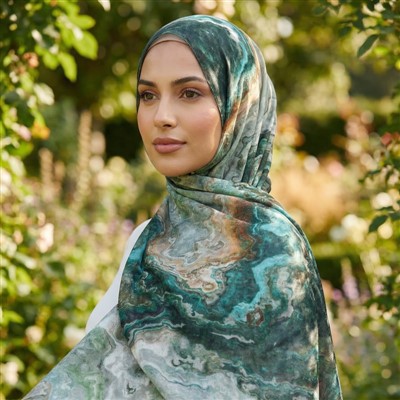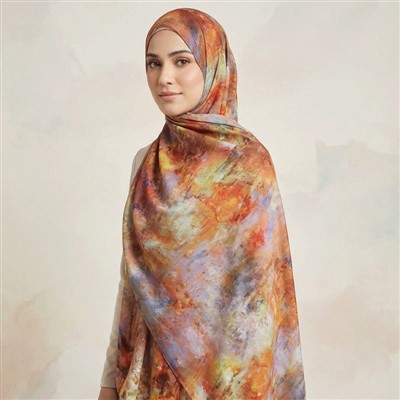
At the recent National Knitting Accessories Industry Summit, Jersey headscarves became a focal point of discussion due to their distinct differentiated characteristics. Compared to common woven, silk, and modal headscarves on the market, Jersey headscarves exhibit a unique positioning in terms of material structure, appearance texture, wearing performance, and suitability for various occasions, providing consumers and brands with a more segmented selection.
According to industry analysis (example data) released at the summit, Jersey headscarves have steadily increased their market share in the domestic mid-to-high-end accessories market over the past year. Their differentiated advantages mainly stem from the comprehensive characteristics brought about by the knitting process. Unlike woven headscarves, which mostly use plain or twill weaves, Jersey headscarves are knitted from combed cotton or cotton blend yarns using a circular knitting machine, forming a fine and uniform loop structure. This structure gives them natural elasticity and a comfortable fit, allowing for slight adjustments to the head shape during wear, preventing slippage and avoiding pressure on the head, unlike the stiffness and restrictive feeling of fixed-size woven headscarves.
In terms of appearance, the Jersey headscarf's knitted texture has a natural three-dimensional feel, presenting a soft checkered visual effect. The color adheres evenly and is layered, showcasing subtle variations under light and shadow. In contrast, silk headscarves have a strong sheen and a smooth feel, but their texture is flatter and prone to snagging. Modal headscarves are lighter and softer, like silk, but lack the three-dimensional texture and shape support of knitted fabrics, resulting in relatively limited visual richness.
In terms of performance, the Jersey headscarf offers moderate warmth and breathability. Its air-layer structure keeps it warm and comfortable in spring and autumn while reducing stuffiness, making it suitable for urban environments with frequent temperature changes. Modal headscarves excel in moisture absorption and quick drying, making them more suitable for high-temperature or active environments. Silk headscarves are cool and lightweight, but weaker in durability and wrinkle resistance. The Jersey headscarf's good knitted resilience makes it resistant to repeated washing and quick wrinkle recovery, resulting in low daily care costs, giving it a comparative advantage among consumers who value convenience.
The distinction in application scenarios is also quite clear. Jersey headscarves, with their versatility and adaptability, can be styled for both casual streetwear and sophisticated business looks, appealing to a wide age range. Silk headscarves are often used as finishing touches in formal or semi-formal occasions, modal headscarves are geared towards sporty and summery needs, while woven headscarves excel in functional scenarios such as wind and dust protection.
Industry experts point out that the differentiation of Jersey headscarves is not simply due to superior performance in a single aspect, but rather a combination of multiple advantages, including elasticity, breathability, a three-dimensional texture, and ease of care. This allows them to find a unique position in the diverse headscarf market that balances comfort and aesthetics. As designs delve deeper into fabric splicing and functional finishing, the distinctive features of Jersey headscarves are expected to be further amplified in autumn/winter new products and cross-industry collaborations, making them a potential category in this niche market.