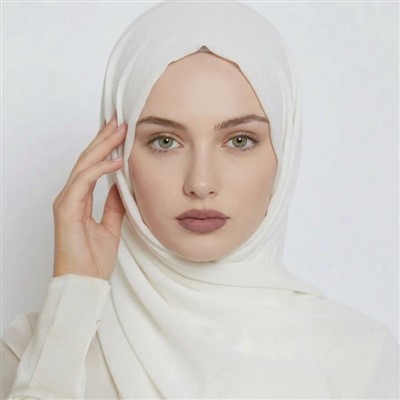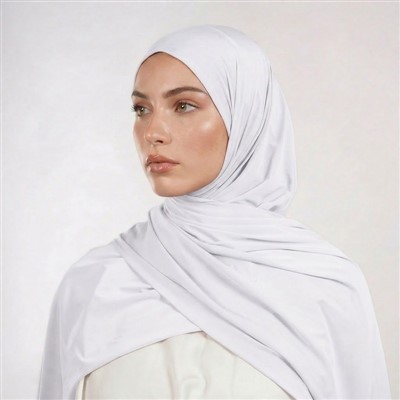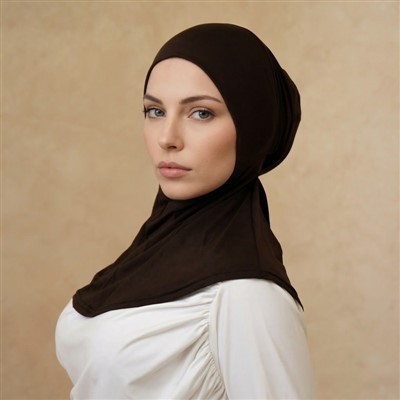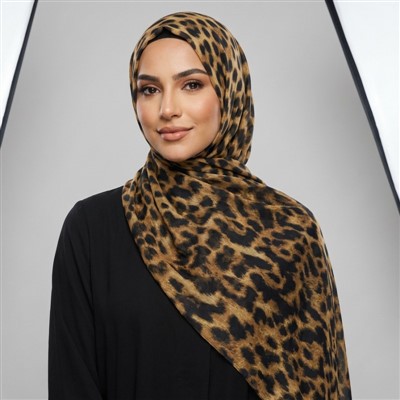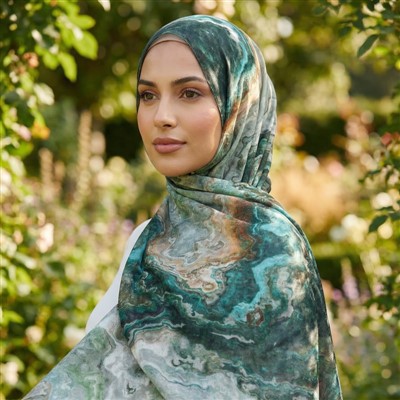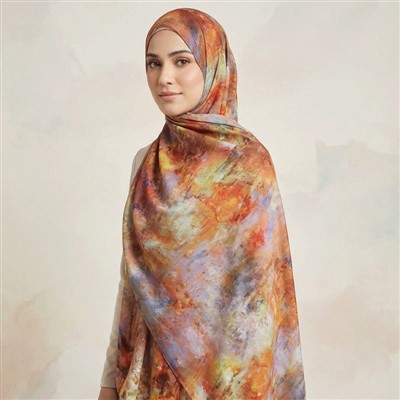
The light, flowing texture and soft sheen of chiffon scarves are inseparable from a rigorous and meticulous manufacturing process. From raw material selection to final shaping, every step affects the feel, drape, and durability of the scarf. Understanding this process allows for a better appreciation of the craftsmanship and quality behind chiffon scarves.
Production begins with raw material selection and yarn preparation. Chiffon commonly uses polyester or silk blended yarns. Polyester provides stable structure and easy care, while silk enhances skin-friendliness and luster. Factories select yarns with uniform fineness and moderate strength according to product positioning and pre-treat them by steaming or oiling to make the fibers more cohesive and reduce breakage during subsequent weaving.
Next comes the weaving stage. Chiffon often uses plain weave or modified weaves, completed on high-speed water-jet looms. The water-jet loom guides the weft yarns with a fine jet of water, weaving them with the warp yarns to form a light and breathable fabric. This process requires precise control of warp and weft density and tension to ensure a smooth fabric surface and uniform porosity, resulting in a finished product with good drape and light transmission. Although the weaving speed is fast, strict requirements are placed on temperature, humidity, and equipment adjustment; otherwise, pilling or weft skew can easily occur.
The woven fabric undergoes pretreatment and dyeing. Pretreatment includes desizing, scouring, and bleaching to remove sizing agents and impurities from the weaving process, restoring the fibers to softness and cleanliness. In the dyeing stage, environmentally friendly dyes are selected according to the design color swatch, and dyeing is carried out in a constant-temperature dye bath through immersion or padding, followed by repeated washing to fix the color, ensuring richness and resistance to fading. Because chiffon is lightweight, the dyeing process requires slow heating and cooling to prevent uneven coloring and wrinkles.
Following this is the finishing process. To achieve the unique smoothness and slightly crepe effect of chiffon, pre-setting, softening, and wrinkle-resistant treatments are performed. Pre-setting uses high-temperature stretching to stabilize the fabric dimensions, while softening involves adding skin-friendly auxiliaries for a softer touch. Some processes involve light calendering or brushing to enhance the sheen or create a hazy, ethereal look. Edge finishing is also done at this stage to prepare for cutting.
Next comes cutting and sewing. Fabric is precisely laid out according to the headscarf pattern, minimizing fabric waste and maintaining pattern continuity. Hot or sharp cutting tools are used to avoid fiber pulling and pilling. Sewing is mostly done by hand or at low speed with fine, even stitches, and corners are reinforced to prevent unraveling. Chiffon is prone to slipping, so the fabric layers must be secured during sewing to keep the edges straight and neat.
Finally, quality inspection and packaging are performed. Color differences, stains, size deviations, and sewing strength are checked. Qualified products are neatly folded, secured with pressure-resistant film or cardboard, and then placed in a dust bag or gift box. During transportation, care is taken to protect against moisture and pressure to maintain the chiffon's lightness and original texture.
From yarn to finished product, chiffon headscarves undergo multiple processes including material selection, weaving, dyeing, cutting, and quality inspection. Each step balances lightness and durability, beauty and comfort. It is this meticulous craftsmanship that gives a seemingly simple headscarf its captivating quality and style.