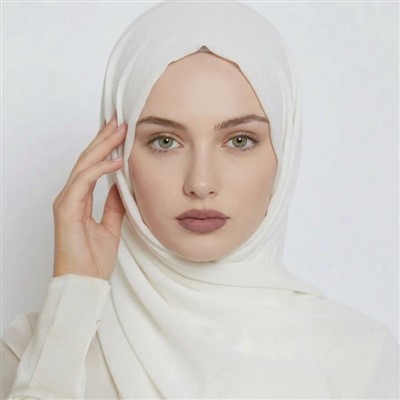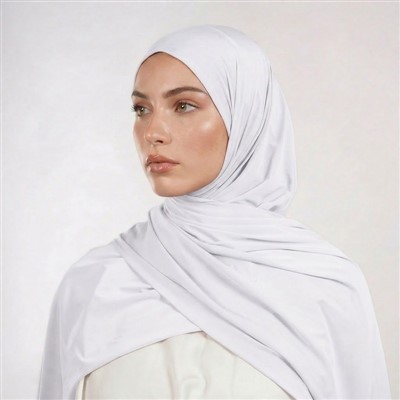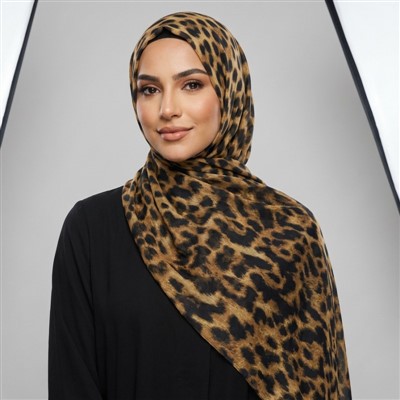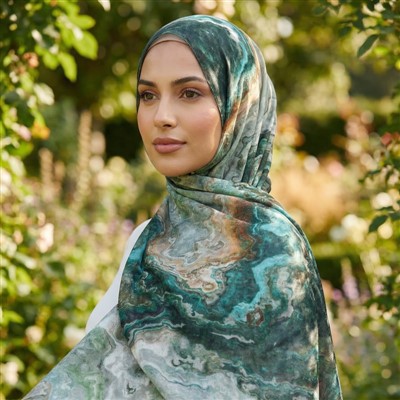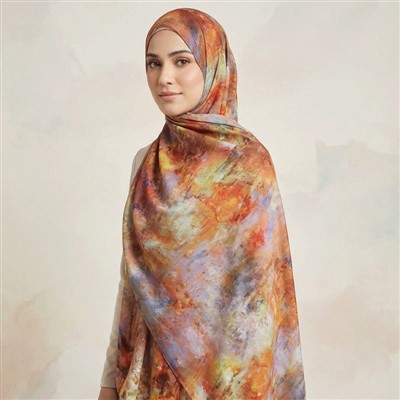
Headscarves are often perceived as pre-selected accessories, but in our fast-paced lives, we often decide to use them on the fly, before or after leaving the house.This forms the so-called "instant headscarf experience"-the practical experience of quickly selecting, wearing, and effectively using a headscarf based on the weather, occasion, and personal condition. Take the Jersey headscarf as an example; this experience involves not only technique but also an intuitive understanding of materials and functions.
One late autumn morning rushing to catch the subway made me truly appreciate the value of an instant headscarf. It was slightly chilly when I left, my hair was loose and slightly creased, so I grabbed a light gray Jersey headscarf, quickly folded it into a triangle shape, and tied it in less than ten seconds. The elasticity of the knitted fabric allowed the headscarf to fit snugly without being constricting, and the slightly warm air quickly dispelled the morning chill, while also concealing my messy hair. Even in the crowded carriage, I still looked neat and tidy. This made me realize that the primary condition for instant headscarf use is choosing the right fabric-the softness and fit of a Jersey headscarf reduces the hassle of repeated adjustments.
Another type of immediate situation is a sudden temperature change outdoors. Last early spring, I participated in a hike in the suburbs. The midday sun was bright, but a cool breeze suddenly arose in the evening. My fellow hikers rummaged through their bags for jackets, while I simply wrapped my folded Jersey headscarf around my neck twice and tied a loose knot at the front. It blocked the evening wind from blowing directly on my neck, and its breathable structure prevented me from feeling stuffy. When we encountered dusty sections of the trail, I even pulled up the upper part of the headscarf to cover my mouth and nose, using it as a makeshift face mask. One wear, three immediate functions-this is the advantage of the Jersey headscarf in adaptability.
Immediate experience also includes quick styling techniques. When traveling for business, hotel mirrors are limited, so I use a simplified process: fold, wrap, and knot. First, fold the headscarf to a suitable width, then wrap it around my head from back to front, tying single knots at both ends on the sides. This keeps the shape stable regardless of hair length and also helps to flatter the face shape. For colors, I prioritize neutral or low-saturation colors that complement my jacket to reduce the chance of making a mistake. After a few practice sessions, this routine can be completed in under thirty seconds, ensuring a presentable look even on a last-minute outing.
Based on multiple real-time uses, the key to success lies in three points: First, familiarity with the size and elasticity of your headscarf, allowing you to estimate the wrapping effect even with your eyes closed; second, pre-setting several fixed tying methods for high-frequency scenarios, such as windproof head covering, neck warming, and headband tidying, reducing on-the-spot thinking; and third, making good use of the material's properties-Jersey's comfort and quick-drying properties ensure a comfortable experience even in a rush or changing situation.
The essence of real-time headscarf experience is transforming accessories from "carefully prepared" to "readily usable" everyday aids. It teaches us to remain composed in changing environments and makes a simple headscarf a versatile helper for dealing with temperature differences, styling, and unexpected situations. Mastering these techniques will make your daily outings lighter and your image management more effortless.