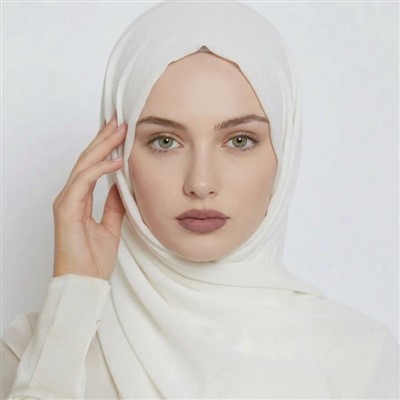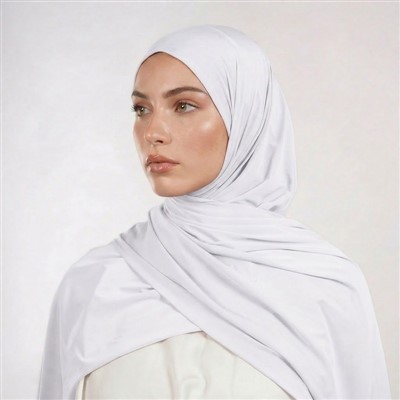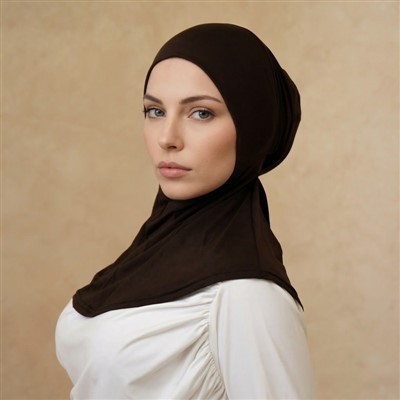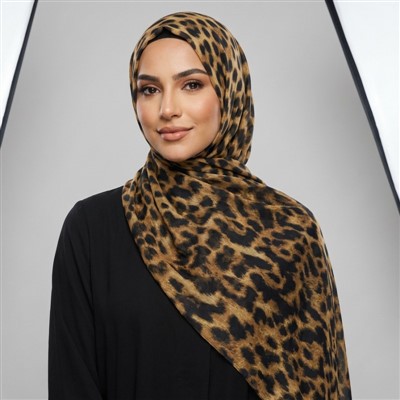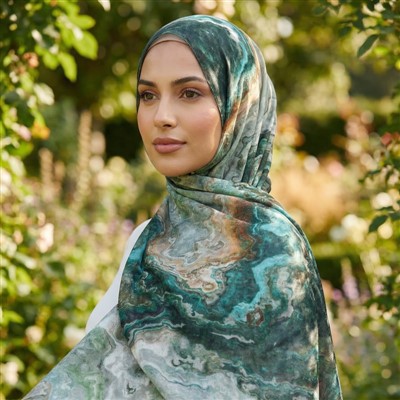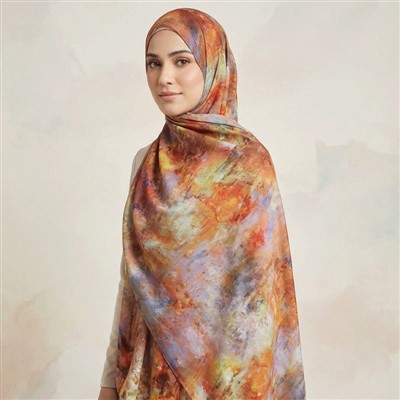
Jersey headscarves, with their soft elasticity and knitted texture, not only offer unparalleled comfort but also provide a wealth of versatility in how they are worn. Learning to use them appropriately in various ways allows this item to serve both a stylish and practical purpose in different settings.
First, let's look at the basic wearing methods. Jersey headscarves are typically made of square or rectangular pieces, ranging in size from 50×50 cm to 70×180 cm (example dimensions). The simplest way is to fold the headscarf in half to form a triangle, placing the apex in front of the forehead, and then wrapping the two sides around behind the ears to the back of the neck and tying a knot for a secure head wrap, suitable for commuting or wind protection. For a more relaxed look, simply lay the headscarf flat and wrap it around the head from back to front, tying a single knot or loose knot at the back for a laid-back street style. For long, narrow Jersey headscarves, you can wrap them around the head twice and then tie a knot on the side or top to create layers and prevent them from slipping.
Second, let's explore ways to style them. Jersey fabric's excellent elasticity and drape allow the headscarf to be folded into various shapes. For example, folding it into a narrow strip allows it to be used as a headband, securing it at the hairline to flatter the face; folding it into a wide neck warmer creates a cozy barrier around the neck, suitable for transitioning between indoor and outdoor environments during the fluctuating temperatures of spring and autumn or winter; folding it into a small square and tying it to a bag handle or wrist instantly elevates the sophistication of the accessory. Skillful use of folding and tying combinations allows for multi-functional transformations from head to neck and even bag accessories using the same headscarf.
Furthermore, there's the application of styling techniques. The colors and textures of Jersey headscarves inherently possess visual warmth, so when styling them, follow the principles of color harmony or contrast. Solid-colored clothing can be paired with a printed or striped Jersey headscarf to create a focal point, while printed clothing can be matched with a solid-colored headscarf to avoid visual clutter. In terms of style matching, a simple work outfit paired with a solid-color or fine-check Jersey headscarf can enhance a sophisticated look; casual denim or sportswear paired with a bright-colored or large-check pattern can boost a sense of energy; and an ethnic or bohemian maxi dress combined with a handcrafted Jersey headscarf can create a free and romantic vibe.
Scenario-specific usage is also worth noting. For outdoor activities, the headscarf can be slightly tightened to act as a windproof face shield, providing warmth and dust protection for the mouth and nose; during travel, it can be used as a neck scarf to protect against air conditioning or sun exposure; for photoshoots or small gatherings, the headscarf can be piled on top of the head or tied to the side to quickly create a focal point. Because Jersey fabric is easy to wash and quick-drying, this multi-scenario switching is virtually effortless in practical use.
Mastering the use of a Jersey headscarf is not just about learning a few tying methods, but also about understanding its material properties and styling potential. Through flexible combinations of folding, wrapping, knotting, and styling, a headscarf can transcend practical protection to express style in everyday looks, giving the wearer greater freedom between comfort and aesthetics.