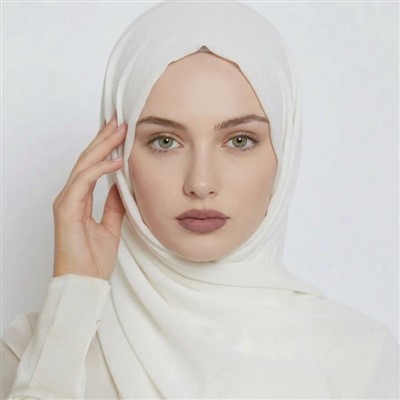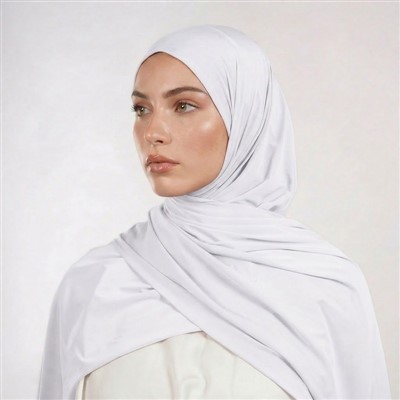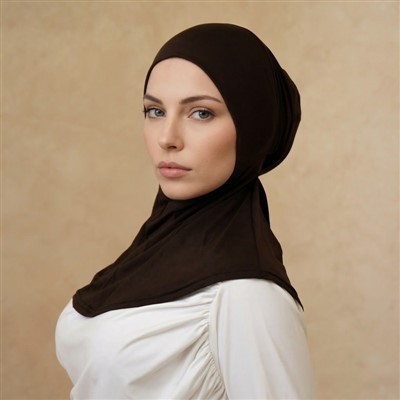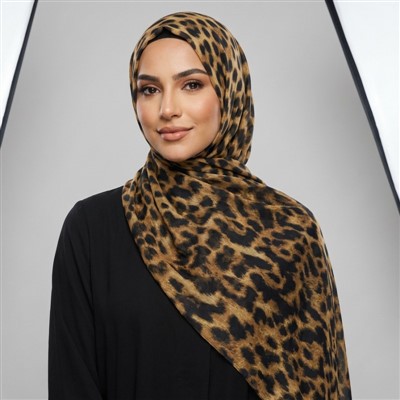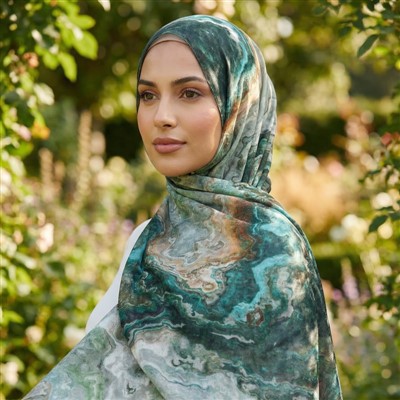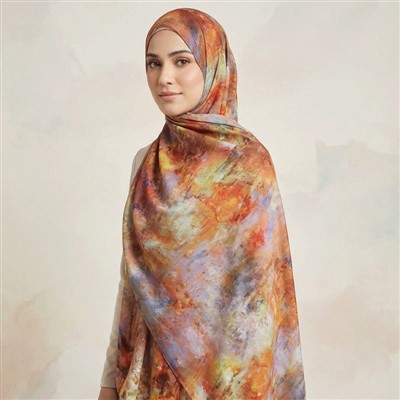
The design of a crepe scarf is not simply about making the fabric wrinkle, but about establishing an organic connection between form, material, craftsmanship, and function, making the folds a core element that enhances both aesthetics and practicality. Its design principles can be explored from five aspects: structural conception, material selection, craftsmanship implementation, visual language, and user experience.
Structural conception is the starting point of the design. The designer first clarifies the application scenario and target audience of the crepe scarf, deciding on the distribution of the folds-whether it's a uniform, full-width wave, focused pleats in specific areas, or random, natural crackling. The layout must balance dynamic aesthetics and wearing stability. For example, in headscarf design, the direction of the folds can be tailored to the head shape to flatter the face, while in shawls, draping folds create a sense of flow.
Material selection provides the foundation for the crease effect. Different fibers exhibit significant differences in elasticity, stiffness, and resilience: cotton is soft and easily retains natural creases, suitable for everyday wear; silk is smooth with delicate and lustrous creases, matching an elegant style; linen is firm with distinct creases, highlighting a rustic style; synthetic fiber blends can control crease persistence and wrinkle resistance through modification, meeting easy-care requirements. Material selection must balance feel, drape, and durability.
Process implementation is key to bringing the design to life. Common methods include heat setting-using differences in heat shrinkage rates in different areas to create fixed patterns; mechanical wrinkling-creating controllable contours through rolling or kneading; chemical finishing-using resins or softeners to alter fiber bending properties, allowing wrinkles to remain after washing; and pre-shrinking treatment-introducing tension differences during weaving to naturally wrinkle the finished product. The choice of process depends on the target crease shape, production feasibility, and post-weaving maintenance costs.
Visual language transforms creases into aesthetic symbols. Designers combine color and pattern to create a harmony between creases and prints or gradients, enhancing textural depth. For example, a dark background with a light texture can highlight the contours of the folds, while a gradient within the same color family allows the texture to blend into the overall design, creating a subtle rhythm.
User experience is the standard for judging the success of a design. Appropriate fold depth and distribution improve the fit and style of the garment, while avoiding stiffness or difficulty in maintenance due to overly deep folds. The design must also consider ease of care, achieving a balance between aesthetics and practicality.
In summary, the design principle of a crepe scarf is a systematic project that prioritizes structure, uses materials as a foundation, employs craftsmanship as a means, utilizes visual appeal as an expression, and ultimately aims to enhance the user experience. This allows folds to go beyond mere form, conveying a unique style and emotion.